

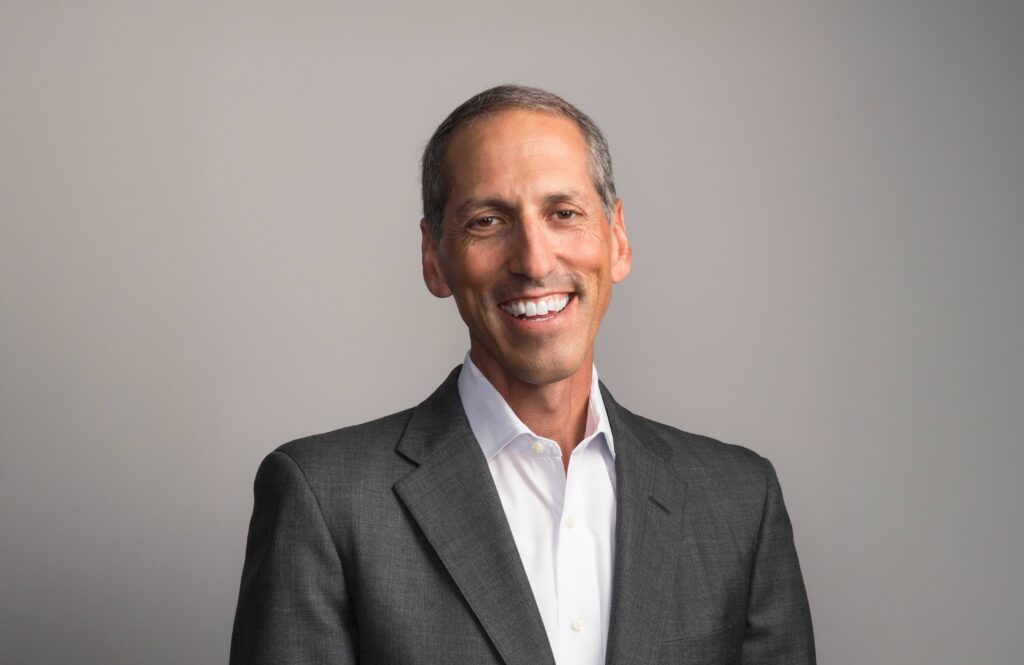
Laura Fuentes, CHRO of Hilton, shared her key leadership lessons with David Reimer and Adam Bryant in this “Strategic CHRO” interview.
Reimer: How have the last couple of years changed your approach to leadership?
Fuentes: One thing that we relied on was a kind of new dimension of leadership. We have all heard of EQ and IQ, but we’ve also talked internally about CQ, for crisis quotient, which we want to hang onto as we think about the future. That means focusing on what matters most.
Before Covid, a lot of companies tended to be very expansive in their strategy and to go after a million things. We’ve all suffered from ill-fated attempts at prioritization over the years. But when the pandemic hit, we had to strip away all the nice-to-haves and focus intently on the biggest differentiators and the greatest areas of leverage. That exercise happened very naturally and organically. And once we focused on the things that were going to get us through this period, we were able to move with greater speed and agility.
Other components of CQ include vulnerability — having the courage to say that we don’t necessarily have all the information and that we have never done something before — and the psychological stamina of our leaders. When you’re going through these prolonged periods of uncertainty and volatility, that takes a toll on leaders and their teams. CQ means being able to find those deeper levels of connection, making time for self-care, and providing reality checks on our ambitious goals.
Bryant: Looking forward, what are the big issues that HR leaders and their organizations should be talking about more than they are right now?
Fuentes: I think we are all talking about the right issues – inclusion, mental wellness and health, learning, upskilling, career growth and mobility — but we have to have honest conversations about what is going to move the needle on those dimensions. We need to acknowledge that certain solutions haven’t served us well, and we need to have the courage to have honest conversations about what is working well and what isn’t, and perhaps try to reach more transformative levels of problem-solving.
To me, it boils down to creating not a work experience or an employee experience but a human experience that makes people feel like they are seen, they are welcome, they are heard, they will be taken care of, and they can take care of their families and loved ones, and that they belong to something greater than themselves.
It’s about driving, through our work, the societal gains that matter.
Some of these solutions transcend any one company. It’s about driving, through our work, the societal gains that matter and the geopolitical progress that the world needs now. How do we think about society in an inclusive way? How do we feed positive momentum into these conversations rather than framing them around power dynamics and the Great Resignation? If we think about this differently, and as an ecosystem that we all participate in, we might arrive at different solutions.
Reimer: Across industries, employees increasingly feel like they should have a voice and vote in company policies. How do you think about that balancing act?
Fuentes: I always like to be clear with our team members and our stakeholders about when our strategy is driven by their feedback versus informed by their feedback. That’s a nuance, and we try to be clear about it. For example, we gather feedback very broadly, using different mechanisms, from our team members.
And we like to follow up and share what we learned and what we’re going to do with the feedback. It doesn’t mean we’re going to act on every opinion that’s shared, but the feedback does build our awareness and will inform our actions. And there are times when the feedback is going to be the blueprint for our next actions.
Over the last two years, we’ve seen an increased call for companies to have a voice, a presence, an opinion on so many matters that impact our shareholders, stakeholders, employees and team members. But when you do engage on an issue, you should have a pretty tight say-to-do ratio.
Bryant: Tell us about important influences that helped shape who you’ve become as a leader today.
Fuentes: My parents were a big influence on me — the work that they did, which was focused on diplomacy and foreign service, and the travel they exposed us to. I learned to adapt to change because we were constantly moving around. My mother also encouraged me to push forward with my own career and to have that independence and autonomy.
A pivotal moment in my career occurred when I started working at McKinsey early in my career. I was three months into the job, just after graduating from business school, and I had a baby. So I started at McKinsey with a three-month-old in tow.
A couple months in, I realized that the pace and the requirements were unsustainable for me. I was planning to tell my staffing manager that I was quitting, but she said to me, “You’ve been doing everything we’ve been asking of you, but you haven’t told us what you need. So why don’t you go back and think about that and then come back and give this a go? And if that doesn’t work after three months, you can quit.”
You need to ask yourself very deeply, what is your “why?”
The lesson that taught me was the importance of thinking about your own “why,” your own true north, and then protecting it. It wasn’t my manager’s job to help me find my true north. It wasn’t my boss’s job to remind me to protect that. It was hard to do that every single day. In consulting, after all, work often really gets started at 6 p.m. But I did find a schedule that worked for me, and it taught me the importance of advocating for myself.
I am not someone who likes to draw attention to myself or make exceptions or feel like I’m not carrying my weight, but I had to be honest that my ambition was equally strong on the personal and professional side.
Reimer: It raises an important question for this moment when so many companies are focused on purpose statements. Employees have a responsibility, too, to find their own purpose.
Fuentes: You need to ask yourself very deeply, what is your “why?” It’s liberating once you figure that out because it keeps everything in perspective and helps you focus on what matters most. During the Great Resignation, a lot of people moved to new jobs for a bump in pay. But does the new job align with your why? If you get it right, it can be the thing that carries you through your hardest and darkest moments, but you have to make sure that you’re living by it, as well, in those hard moments.
Bryant: What’s the most important leadership lesson you’ve learned over the course of your career?
Fuentes: To truly listen and to be willing to listen even more. Over my career, I’ve had a bias toward solving problems and removing obstacles for my teams and clients. I’ve learned over the years to ask better questions and listen to the answers, so that I’m responding more rather than reacting.
I have a tendency to be Type A and want to get things done and move quickly. I’ve had to teach myself, particularly over the last two years, to be a better listener and more thoughtful responder, so that I’m elevating my team and getting out of their way.
Join the conversation on LinkedIn.
Click here to download the article.
Recent




 English
 English (UK)