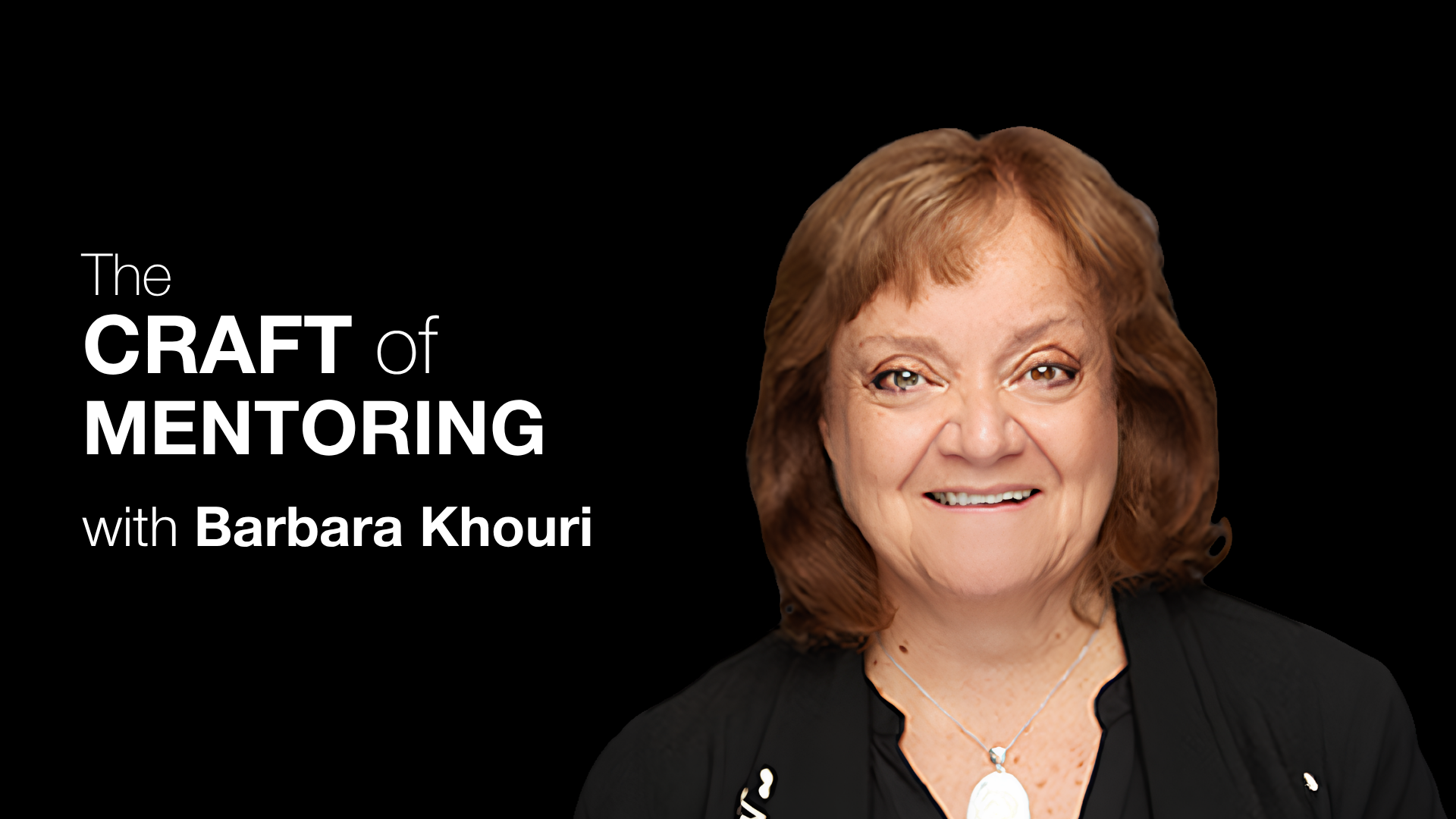
Barbara Khouri, former Deputy CEO & President of Swatch – US, and a mentor and coach at The ExCo Group, shared candid insights with Adam Bryant. Key themes include building trust through confidentiality and a judgment-free zone, using the lifeline exercise to surface how life experiences shape leadership, and cultivating bone-deep self-confidence to own hard decisions.
Bryant: What for you is the secret sauce of effective mentoring?
Khouri: It’s caring about our clients, developing trust, and giving them a safe space to talk. That trust is built in part on strict confidentiality and also creating a judgment-free zone. I make it clear that I have no agenda other than to help my clients. And I also tell them that I’m not going to make the decisions for them—that’s up to them—but that I will share my point of view.
Bryant: What tools and approaches tend to create the greatest unlocks for you?
Khouri: The one I keep coming back to is the lifeline, in which people share the highs and lows of their life, starting at a young age. It usually leads to important insights about my clients. We’re not therapists, but we are trying to understand how their life experiences and emotions influence their decisions and their leadership style. You can’t separate your personal life from your business life.
Bryant: Is there a story you can share about a particularly tough conversation you had to have with a client that ultimately ended well?
Khouri: There are generally two categories. One category is that some clients don’t necessarily think they want or need a coach. Maybe they’ve never had a coach, or they did have one who wasn’t helpful and they didn’t get anything out of their time together. But I’m pretty tenacious, and when people give me some of their time, I’m able to get them to understand the benefit of working with me.
Another category I’ve occasionally encountered is clients whose bosses are skeptical about their growth potential and their patience has almost run out. They want to see quick results from a coaching engagement; otherwise, the person’s tenure at the company will be cut short.
In those instances, there have been times when the executive has been resistant to the feedback that we share with them from all the interviews we do with their bosses and their peers. They are in denial, even though the perception of others is all that matters in this context.
Those are tricky conversations, because you have to finesse the feedback you are sharing with them. You can’t be so direct that people shut down. Sometimes you need to take breaks so that people can absorb what you are telling them.
After all, it’s emotional. And if you’re not self-aware, you can think you’re doing okay, and so it’s hard to hear that there is a whole set of people who don’t think you’re doing okay. We sometimes have to be the messenger to share feedback that nobody else has been willing to share with them. But I’ve been able to work through those tough moments, and I’m still in touch years later with those clients.
Bryant: What’s the best lesson you learned from one of your mentors or coaches over the years?
Khouri: My first mentors were my parents, who were unconditional in their support and their love for me. They told me I could do anything, and it gave me bone-deep self-confidence from a young age for everything I did. It’s part of my DNA, and helps explain why I put myself into incredibly stressful situations, like the many turnarounds I’ve managed.
That value system helped me throughout my career, particularly when I was the first or only woman on the executive team at many companies. I learned that I’ve got to own whatever I’m doing, deal with the consequences, and that I can’t take anything personally.
And today, I talk to my clients about the importance of having bone-deep self-confidence, along with being adaptable and flexible. When you have that level of confidence, it allows you to deal with the toughest situations.
It’s not about arrogance. You need bone-deep self-confidence to balance the humility and insecurity that many people feel. That provides the courage and ability to make and own hard decisions, rather than putting them off. That confidence also gives you the ability to admit that you’ve made a mistake and take a different direction.
Recent