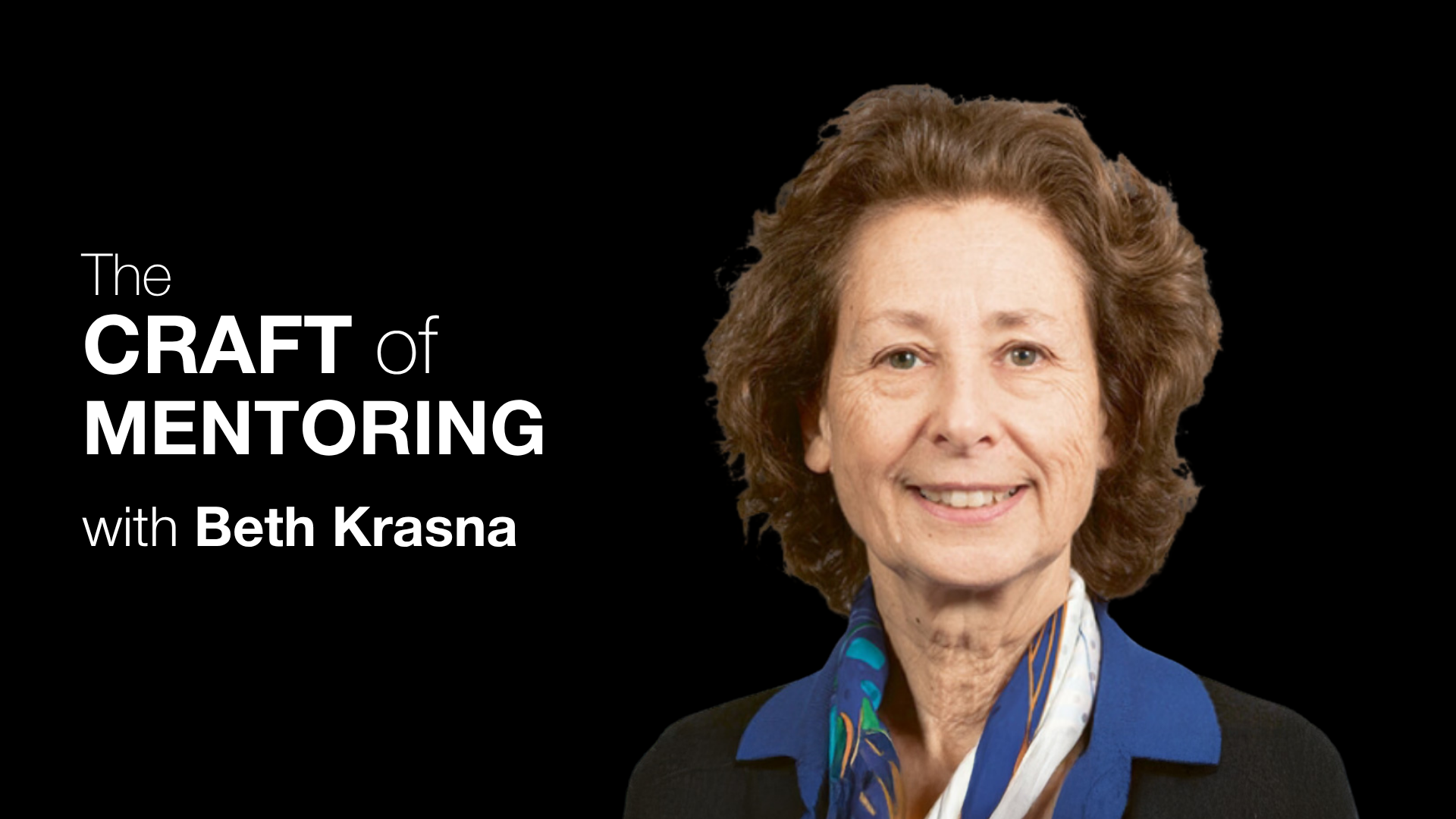
Beth Krasna, President of the Board of Directors at Ethos Services SA and the Geneva Graduate Institute, and a mentor and coach at The ExCo Group, shared her approach to developing leaders with Adam Bryant. Key themes include the delicate balance between supporting and challenging clients, why the stakeholder matrix is a powerful unlock for high-achieving executives, and how the distinction between doing things right and doing the right thing defines the most courageous leaders.
Bryant: What to you is the secret sauce of effective mentoring?
Krasna: There’s got to be a connection, and the person has to trust you and respect what you say, because otherwise you’re shouting into the void. And it’s important that there’s self-reflection from both the coach and the client as they learn about each other.
There is also a very fine balance between supporting the client—because they come to you with tricky problems, they need a sounding board, they want some advice—and challenging the client too much. I find that balance is tricky sometimes, because if you challenge them too much, they can get destabilized. And if you don’t challenge them enough, then you’re just an echo chamber for them.
It’s important to keep their feet a little bit to the fire and hold them accountable to the objectives we agreed on for their leadership development. Because that’s what’s going to help them succeed in their current role and get them ready for their next role.
Bryant: Is there a particular tool or framework that tends to lead to the biggest unlocks for you?
Krasna: I like the stakeholder matrix. Our clients tend to be very successful people. They wouldn’t be in their roles if they weren’t driven and had a tremendous work ethic. So, they tend to grumble when things don’t play out as they expect or as quickly as they want them to.
The stakeholder-matrix exercise helps clarify what my client needs from key stakeholders and what they need from my client. Often, that leads to an aha moment and a new strategy for working more effectively with their colleagues.
Managing stakeholder relationships at this level can be particularly difficult for women. As leaders, they spend most of their days facilitating other people’s work. That means they have to do their work outside of normal office hours.
And for women who have families, they often have extra work at home, even if they have help. In big companies, these roles often require a lot of travel and dinners, and I find women will sometimes skip certain events because of all the demands they are juggling. I understand that, but I also underscore to them the importance of showing up and being present at those events.
Bryant: What’s the best lesson you learned from one of your mentors over the years?
Krasna: There wasn’t one mentor in particular, but I got on boards quite early in my career, and I learned a lot from the other directors about how to frame challenges and how to always look for more possible solutions.
I’ve also learned through experience about the importance of building a coalition of the willing when you step into a turnaround role. You have to find people who are supporting what you’re trying to accomplish. And you need to get some quick wins that pull people off the fence so they will support you, as well. Those wins also help build optimism about growth, because you can’t just cut costs when you’re in a turnaround.
Bryant: What is the wisest thing that you’ve ever read, heard, or said in the context of leadership?
Krasna: It’s about doing things right versus doing the right thing. You’ll never get in trouble for doing things right. But when you do the right thing, you’re going out on a limb. It’s riskier.
I live in Switzerland, and here we do things right. The whole school system is built around how to succeed in the system, but they don’t necessarily teach how to do the right things. About 80 percent of the CEOs of public companies in Switzerland are foreign, because the Swiss make good managers—they do things right, but they don’t necessarily do the right things. And so they have to look outside the country for those kinds of leaders.
As a leader, I’m not paid to be popular. I have to be fair. Everybody’s watching you. But when you do the hard things, and you’re being fair, people see it, and they will follow you.
This interview is part of our “The Craft of Mentoring” series, led by Adam Bryant, featuring ExCo Group mentors and coaches sharing their approach to developing leaders.
Recent