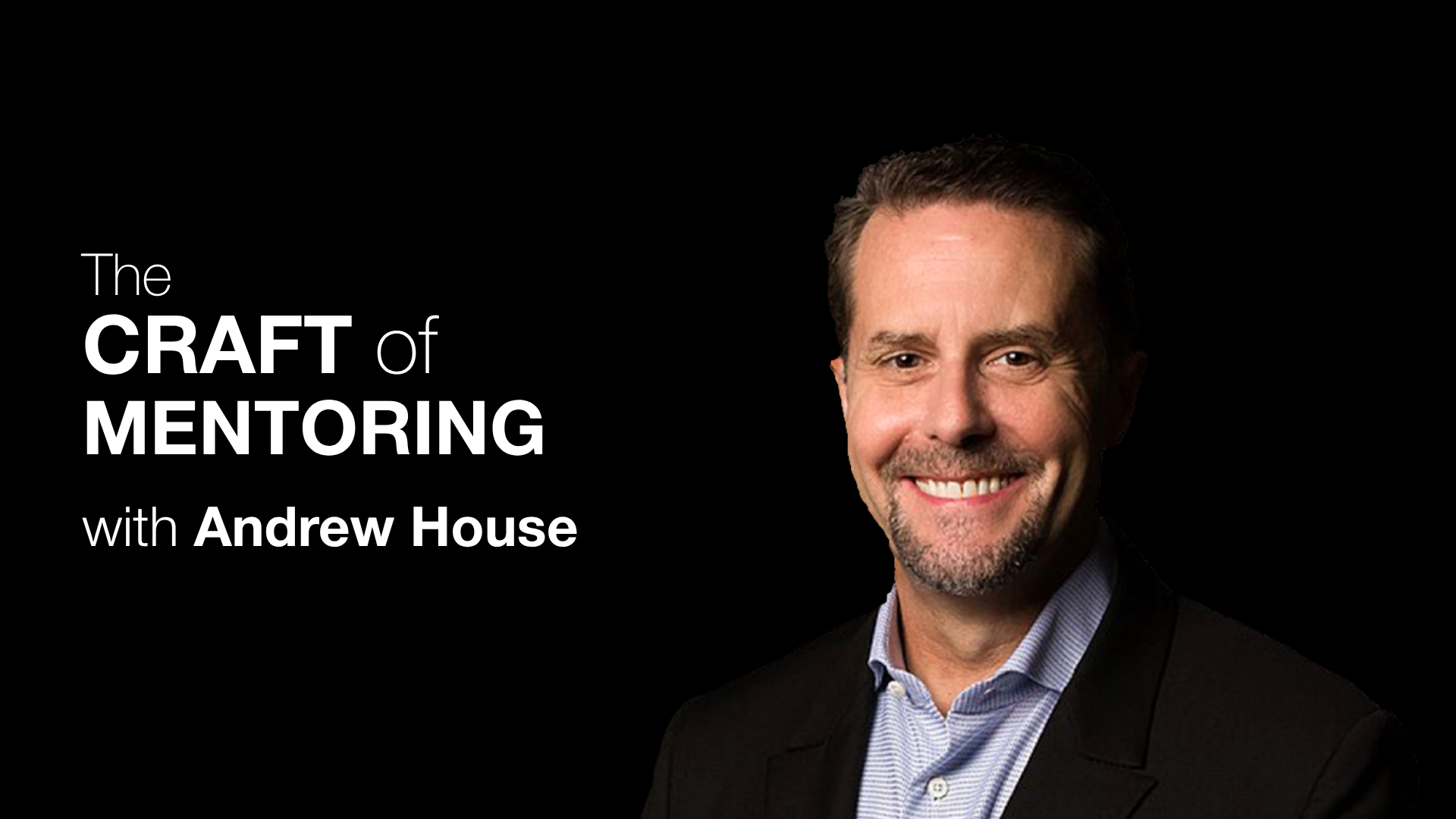
Andrew House, former CEO and Chairman at Sony Interactive Entertainment, and a mentor and coach at The ExCo Group, shared candid insights with Adam Bryant. Key themes include the power of reframing over solution-giving, how stakeholder mapping unlocks hidden time and focus, and why building an organization is an act of imagination.
Bryant: What do you consider to be the secret sauce of effective mentoring?
House: The first and most obvious layer is trust. It has to be there for any kind of lasting impact to take place. The next layer is the idea that, as mentors, we are there fully for the other person. And the next layer is about their agenda and what they need to accomplish as leaders.
You also have to avoid anything that feels like solution-based coaching. Very often, our clients are just looking for an answer, and sometimes it can be tempting to cut to the chase and say, this is what I think. But it is so much more impactful to pose the right questions that yield an insight for the client so that they can get to their own solution.
There’s also a slight paradox that’s at the heart of every mentoring relationship. You need to have deep empathy but also a sense of distance. If you’re too far down in the weeds with the person, you’re not really going to be able to help them.
Bryant: Is there a framework that you use that tends to lead to the biggest unlocks?
House: One is the simple concept of reframing how you think about a particular issue, which connects back to helping people achieve their own insights, rather than just trying to provide them with solutions.
What I find myself constantly doing is taking the particular issue they are wrestling with and providing a new framework on the spot to challenge their thinking. It’s the antithesis of saying, “In that situation, here’s what I would do.”
In the moment, the client often won’t have the answer, either, but it’s a much better approach long-term to help them think in new ways. They might come back the next time I see them and say, “That framework was a great way to approach the problem, and I eventually got to the answer I needed.” So it’s about giving them a toolkit rather than providing solutions.
Reframing is what great mentors did for me earlier in my career. They would say to me, “You’re obsessing about this one particular issue. But if you change this one element and think about it this way, maybe that gives you just a new window on it.” And then I would say, “I really hadn’t thought about it that way. Maybe that’s the approach I should have been taking all along.”
I am also a big fan of having conversations about stakeholder management. It’s rare to find people who have taken a step back and really assessed the stakeholder landscape in which they operate – what do people need from you, and what do you need from them?
It’s even rarer to find the person who’s applying their bandwidth and their time in the areas that they ideally want to focus on. There’s usually a big gap there, and that, in and of itself, can be an insight that people can act on.
Stakeholder management can also be a broader lens outside of work – you can apply it to other folks in your life, because ultimately, it’s about how and where you should prioritize your time. Most people are distracted by the moment or by the squeaky wheel, so trying to get people away from that can be very valuable.
Bryant: What’s the best lesson you learned from one of your mentors?
House: It wasn’t a lesson per se, but it was definitely a way of thinking. I had a mentor whose superpower was to be able to see the perfect career path for people in the organization. Often, his ideas seemed to come out of left field, and they would make you think, “I would not have imagined that you could have charted that course for this person.”
What I took from that was that building an organization is not about looking at skill sets and experience on paper. It’s about looking at deeper personality traits and fundamental skills. Creating a team and building an organization is an act of imagination, because it’s also thinking about the future state of the business, rather than the here and now.
Bryant: What is the wisest thing that you read, heard, or said in the context of leadership?
House: Give people an opportunity and a chance, and in the vast majority of cases, they will rise to that opportunity and outperform for you. It’s about having an inherently optimistic view of people and their potential.
Recent