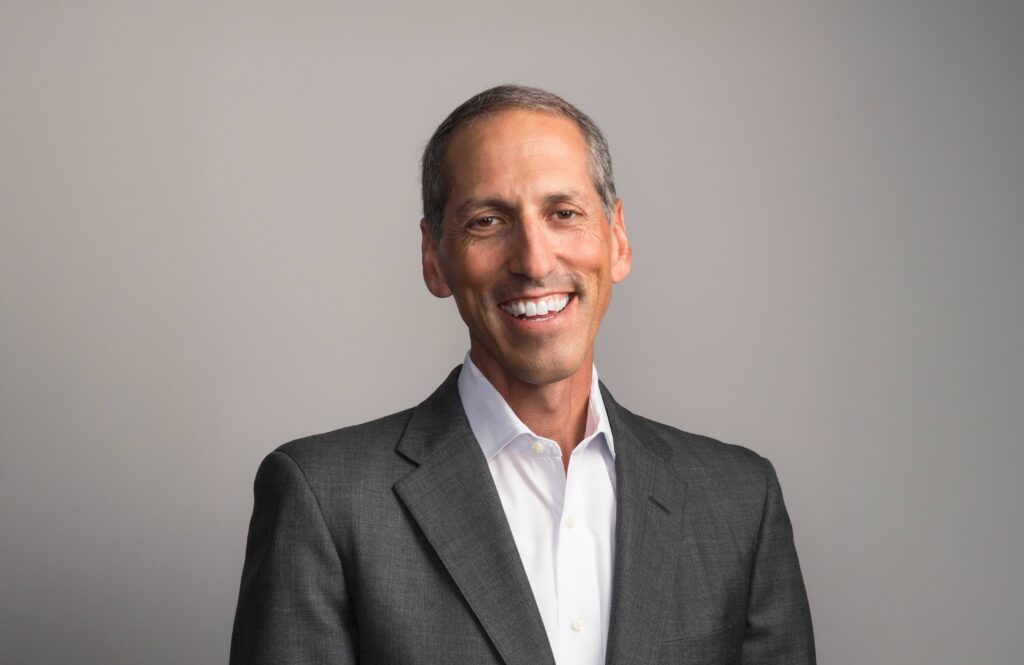
Scott Finder, former Managing Director at BlackRock and a mentor and coach at The ExCo Group, shares insights with Adam Bryant on three key themes: helping clients get clear on why they’re seeking mentoring, the power of the lifeline exercise for breakthrough moments, and why business moves at the speed of trust.
Bryant: What to you is the secret sauce of mentoring?
Finder: First and foremost, it’s helping the client get very clear about why they are seeking a mentor or coach. Usually, people have some rough idea, but it’s important that they get clear on what’s really in it for them. Because if the outcome they are seeking is not absolutely essential, they won’t sufficiently commit to the follow-through necessary to get to breakthrough results.
You also have to be willing to empathize, but not shy away from the tension of challenging the client, particularly when they’re thinking small or because of some limited narrative that they’ve created about the environment in which they exist. Those narrowing factors get in people’s way, and it’s critical that we are willing to call them out.
The last thing I’ll mention is the importance of being able to relate to what the client is talking about and being able to share examples from our own careers and lessons we’ve learned. That can make a big impact and help the client create framing to step back and reflect on their own situation.
Bryant: Can you talk more about the narratives that people create for themselves?
Finder: We have to understand how much our clients’ decisions are driven by emotion rather than based on strategic decisions. Because there usually is some emotional component— we’re not trying to solve their emotions, but we are trying to understand them.
If you don’t understand where people are coming from, you’re going to stay on the surface and never really get to the work. We like to think our actions are driven by logic, but the reality is that, generally speaking, everything we do is driven by emotion and rationalized by logic.
Bryant: Is there a particular tool you use that tends to lead to the greatest unlocks?
Finder: One that I value a lot is the lifeline exercise. When you ask people to reflect on the course of their lives and understand how both positive and challenging events have shaped how they think, it frequently leads to breakthroughs. They understand how they’re carrying past events and past thinking into how they think about future possibilities, or a lack of possibilities, for themselves. When they share their lifeline, you can often make connections for them that they may not see themselves. Everything else can open up after that. It’s very powerful.
Bryant: Is there a story you can share about a tough conversation you have had to have with a client that ultimately ended in a good place?
Finder: I worked with a talented, experienced senior executive who had been with his company for a long time. He ran a division and had numerous wins and promotions over many years. His challenge was that, because he had so many wins, he gradually started thinking that he knew better than everyone around him, particularly about his own business.
Slowly, passively, he had put himself at odds with his boss, with the board, and with other key people. I don’t think he even realized he was doing it. He just felt that he had the right answer, even though, when I was initially working with him, he was not achieving the results that key stakeholders expected of his division. He felt that their expectations simply weren’t realistic, and this perspective was working to his detriment.
And so we had a conversation over a handful of sessions that, while uncomfortable at times, started with him saying, “Trust me, it’s simply not possible. We can’t do it.” But then I started asking him questions, including what if it simply has to be possible? How could you make it happen? What would have to be possible to do it? What would you have to believe?
Once he was able to make that flip in the way he thought, he started finding creative, untapped growth opportunities that made a very material difference in his growth numbers pretty much right away. There was low-hanging fruit that he hadn’t even seen because he had been stuck in a certain thought pattern that had created artificial barriers for him.
Bryant: What’s the most powerful lesson you learned from a mentor?
Finder: It’s that our external reality is controlled by our internal reality. We have so much more control over how we feel, what’s possible, and what life looks like for us—much more than anything or anyone else can do to or for you. That, to me, is one of the most freeing and empowering thoughts.
Another way of looking at it is that you’re on your own. You have the ability to make an impact. It’s all about you. What are you going to do with it? It forces you to take responsibility, and it also forces you to project your reality into the world, and people will respond in kind.
As just one example, if you are asking your boss for permission for something, and you expect them to say no, you will project that in your body language, your tone, and the words you choose. They will subconsciously interpret that the answer is no, and that’s the answer you will get.
Bryant: What is the wisest thing you ever read, heard, or said in the context of leadership?
Finder: It’s not an original quote, but business moves at the speed of trust. It’s a Stephen Covey quote that he said many years ago, and it still rings true. If you don’t tend to the human element first, the dots of the work never fully connect or meet the potential of the moment.
When I was a leader, I can’t tell you how many times I saw people on my team come back and tell me about a meeting they had with another department, and the other department was not cooperating. Even though there were all these logical reasons why they should help, they were resisting.
And I would have to say, Okay, let’s take a step back. Did you treat them like a box to check? Did you take the time to understand where they were coming from, regardless of whether you feel it’s relevant to the situation? Did you treat them like their input was valuable? Or did you simply present to them and then expect that they would say yes?
Invariably, it was the latter, and I or someone would have to coach them to try again, or ultimately get involved to fix the problem. By simply having a human conversation, letting people be heard, building some trust, reassuring them, and listening to their concerns, all of a sudden, they were cooperative. You simply can’t trip over the trust box.
Recent