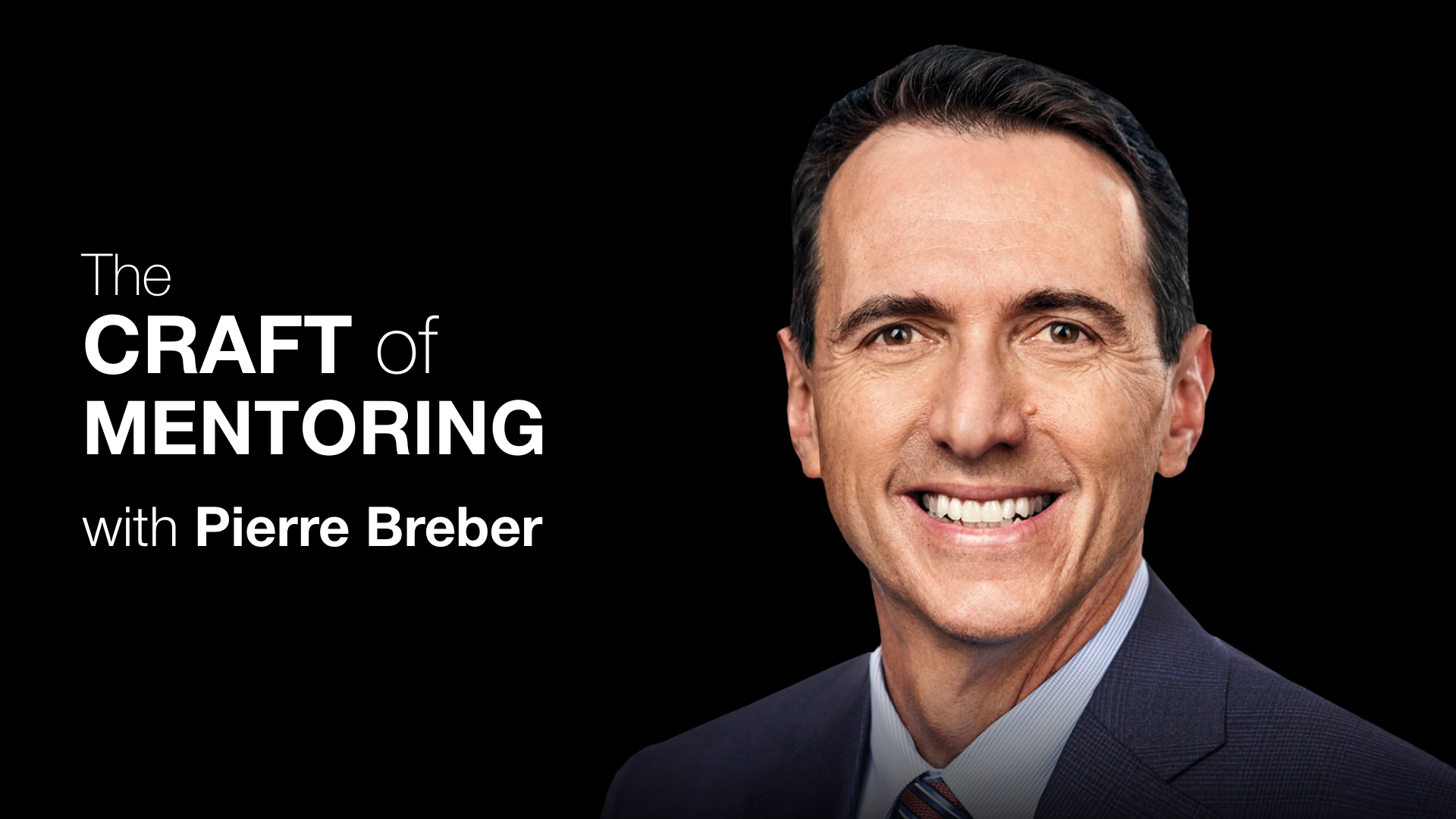
Pierre Breber, former CFO of Chevron Corp and board director at The Clorox Company, Southwest Airlines, and PACCAR Inc., and a mentor and coach at The ExCo Group, shares insights with Adam Bryant on motivating senior leaders to tackle growth areas, the power of focusing on just two to four development priorities, and why mentoring at the executive level is more like jazz than an orchestra.
Q. What do you consider to be the X-factors of effective mentoring and coaching?
A. The clients I work with are C-suite executives. They are far along in their careers and this is not their first 360. So the challenge becomes, how do you motivate them to actually deal with their growth areas, the things that don’t come naturally to them?
All these executive do not have enough time—for work, and for their life outside of work. So part of how you motivate them is to say that working on these areas will help them in the workplace and outside of work by being more efficient, more effective, and by empowering others more.
As good as they are, almost any executive at that level has opportunities to elevate their leadership skills and to free up time, and that’s their most scarce resource. So the prospect of having more time motivates them to tackle some of these challenges that have been there for a while.
The other thing I do is to focus on just two to four things. When I’ve asked clients about previous 360s, they often tell me that they were given a laundry list of things to work on. You have to keep it to two to four things. These leaders are outstanding. They have many strengths. We want to maintain those. But if we can just make progress on two to four areas, that will make a big difference. You have to stay focused on those.
There isn’t a playbook. It’s more like jazz than an orchestra. Yes, there’s some structure, but you’re always adapting to the client. If they go in a certain direction, you have to go with them, and then you’re bringing the discussion back to the core areas of focus. It’s got to be much more improvisational.
The last point I’ll make is that, as we all know, many of our weaknesses in leadership are in fact our strengths taken too far. So it’s almost always about balance and situational awareness. For example, if someone is too involved in the details of their team, they’re not likely to shift completely to a trust-and-empower approach. That will be too scary. Some issues do require going deep and you want to be kept informed. The point is to create more time to think about strategic issues and to have more time for life outside of work.
Many of these challenges are subtle but significant. When they start getting feedback that their shifts are making a difference, then starts a virtuous cycle and it builds from there. The X factor for us as mentors is that these challenges that are clients are dealing with are not theoretical to us. Oftentimes, we were once in the very same situation that our clients are in now, and we can share what worked and what we learned, including lessons from mistakes we made.
Q. What’s the most powerful lesson you’ve learned from the best mentor you ever had?
A. Don’t outsource your time. Because of the scarcity of time, it will control you if you don’t control it. I’ve been surprised by how many executives talk about how full their calendars are, as if it were out of their hands. There are certain things that you don’t have control over, of course—like board meetings—but there’s a lot more that you can control than you think.
When I was in my CFO role, I intentionally created space on my calendar for thinking time. Also, crises come up, and you need to build in time to deal with those. If you have your team organized and you’re trusting and empowering them, you shouldn’t be the busiest person, because you’re doing a different kind of work.
Q. Leadership seems to be getting harder every day, given the relentless disruption, the ambiguity, and the politicized landscape we’re in. How does that inform how you work with clients?
A. I would say 90 percent of the conversations I have with my clients are about working with people, including their teams, their peers, the CEO, and the board. It’s rarely about strategy, AI, or issues like that. It’s usually about how to work with people and get things done.
Recent