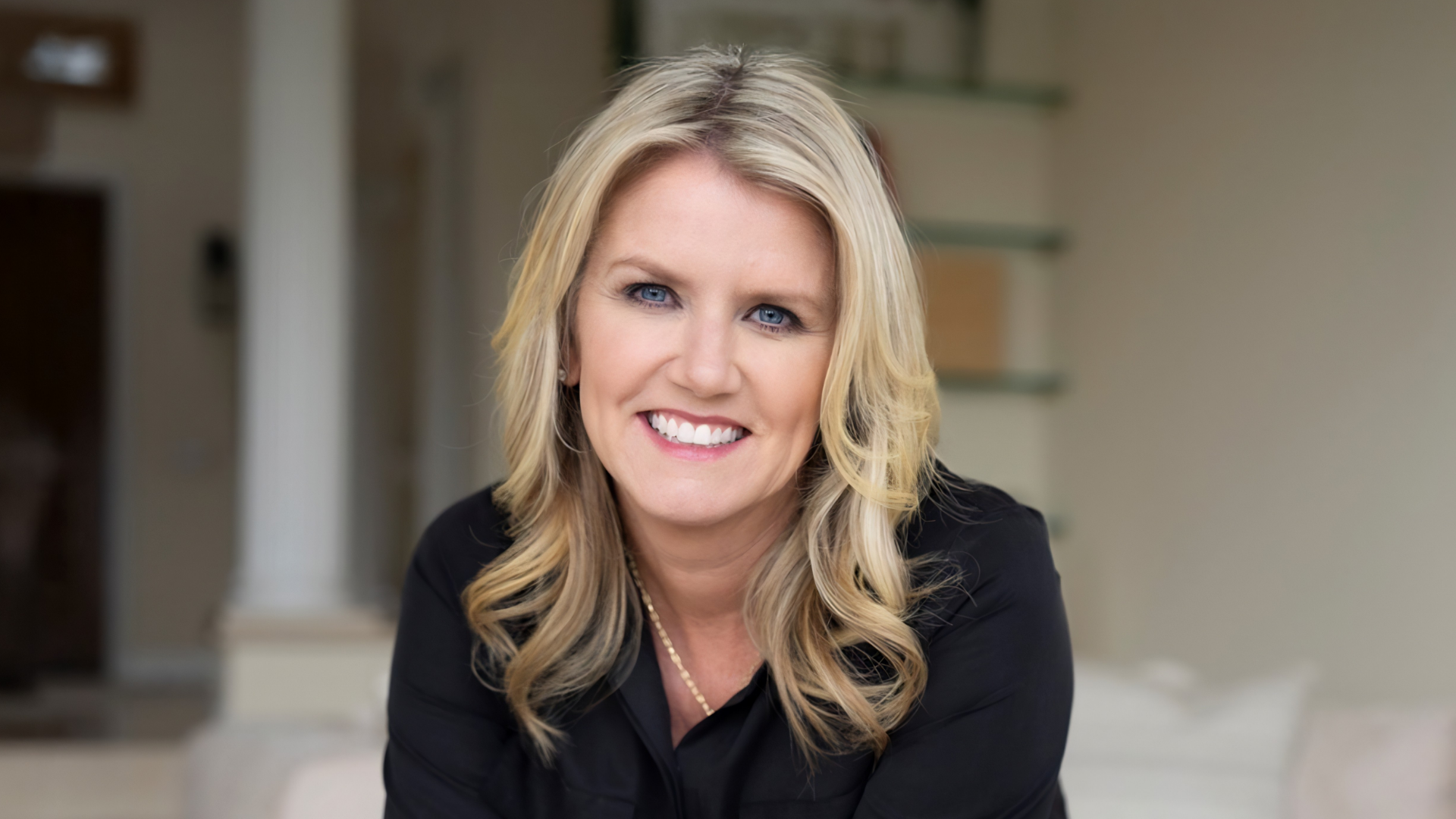
Amy Coleman, Chief People Officer at Microsoft, shared her key leadership lessons with Adam Bryant and David Reimer. Key themes include why leaders must trade certainty for clarity and context, the urgent need to both learn and unlearn as AI reshapes work, and how to hire for adaptability, imagination, and the scrappiness to pick up the ball.
Reimer: What challenges are top of mind for you these days?
Coleman: I think a lot about how much has changed simply about the meaning of “work,” particularly for information workers—what it is, how we do it, and where we do it. We’re rethinking everything.
Satya [Nadella, CEO of Microsoft] and I talk a lot about how we take the last 50 years of Microsoft’s history and use that as an asset versus an anchor. It can be tempting in a company with a long history like ours to think that it might be easier to go faster without some of that history.
But we’ve got to use the successes, resilience, platform shifts, and transformations from our past to help us win in this moment, too. As a people function, we are here to accelerate the business, and part of accelerating the business is taking care of our employees, so they want to be part of this journey.
There are so many questions we are thinking through. How do we redeploy and reskill our own talent? How do humans and agents partner together? How do we prepare people for jobs that we can’t even see today? It’s a really complicated time, but I often talk with my team about what a privilege it is to be working on work at this moment.
Bryant: Many employees are in a bit of a defensive crouch these days, given everything that’s going on in the world at large and because of the uncertainty created by AI. How do you calm the waters?
Coleman: Part of it is reminding people that we’ve been here before. Maybe not these exact conditions, but we’ve navigated tremendous change. And we also remind them who we were while doing it, and what we learned to get to the other side. That’s super important.
We’re also acknowledging the moment and talking about the uncertainty. And we are having conversations with leaders about how they step into that uncertainty. If you think about the last seven years, there have been many reasons for leaders to back away from speaking about uncertainty, because many employees were asking leaders to weigh in on often-controversial topics.
I don’t think we’ve fully recovered from that. But in times of great change, what do we all need? We need to communicate. We need to connect. And so I’m talking to a lot of leaders now about how, even when you don’t have the answers, to step into that space and do it with humility and curiosity.
You don’t promise certainty, but you do promise clarity and context. There’s no quick fix for this moment. It’s about having each other’s backs and being humble enough to ask questions and to ask for what you need.
Reimer: As you think about leadership muscles necessary for an uncertain future, what are the most important X-factors?
Coleman: The companies that are going to succeed are going to have a workforce that can learn faster. That ability to learn encompasses so much, and we’re also now talking about the ability to unlearn.
Those characteristics that taught you to be learners—curiosity and humility, and that craving, that obsession with what’s new—I think all that stays true. But in this moment, there is just as much, if not more, to unlearn than to learn. We’re talking here a lot about how you become a beginner again, and that includes becoming more comfortable with being uncomfortable.
Our leaders need the adaptability that a beginner’s mindset brings, and they need to be someone that people want to be on this journey with. And that’s about trust, courage, sharing credit, and listening well. I wish they were never called soft skills, because these are hard skills to learn about EQ in the workplace. Satya and I are also looking for leaders who are really deep in their area of expertise but who also lead first with an enterprise mindset.
Bryant: How do you hire? When you’re interviewing a job candidate, what questions do you ask?
Coleman: I’ll explore a lot of themes I’ve mentioned, including their ability to learn and their resilience. I want to know about their ability to adapt, so I will ask questions like, tell me about a time when you changed your mind.
If somebody has been in the people business a long time, I’m also looking for imagination and whether they have the power of unconstrained thinking. It’s hard to transform your own job from your own seat, so I need people around me who are pushing me and are really expansive in their thinking. I’m asking things like, “If you were unconstrained by resources, what would you do differently?”
Finally, I’m looking for people who are willing to pick up the ball. You can call it teamwork or scrappiness, but I am looking for that quality. Many people can point and stare at the ball, and I need someone who’s going to pick it up and do something with it, and share the context and communicate with others that they’re doing it.
Reimer: What were the important early influences that shaped who you are as a leader today?
Coleman: It all goes back to how I was raised and what I believed was possible. There were a few key moments, including one when I was about nine years old. My dad filed a suit against the county we lived in because I was not allowed to play Little League.
At the time, there wasn’t any softball. My dad was so incensed by the idea that I couldn’t play that he took it on, and he involved me in the process. The team I ultimately joined was a very bitter group of nine-year-old boys who had to take on the only girl who wanted to play.
But the message it reinforced for me was that I could do anything, and my parents wanted to put those words into action. But it’s not all flow. There is going to be friction in life. And that was my friction moment—when my dad said, that’s not right and I’m going to do something about it. My parents instilled that in me.
Bryant: Your job must feel overwhelming at times, given all the big-picture questions you’re trying to answer, in addition to everything else.
Coleman: If you do not love context-shifting and variety, this is not the job for you. And everybody’s problem is your problem, and it’s their top priority. You have to make quick decisions and remember that other people can help you do your job. Honestly, it’s also a privilege to take care of the 220,000 people at Microsoft. I often think of something that Satya said to me: “The job is the reward.”
Recent