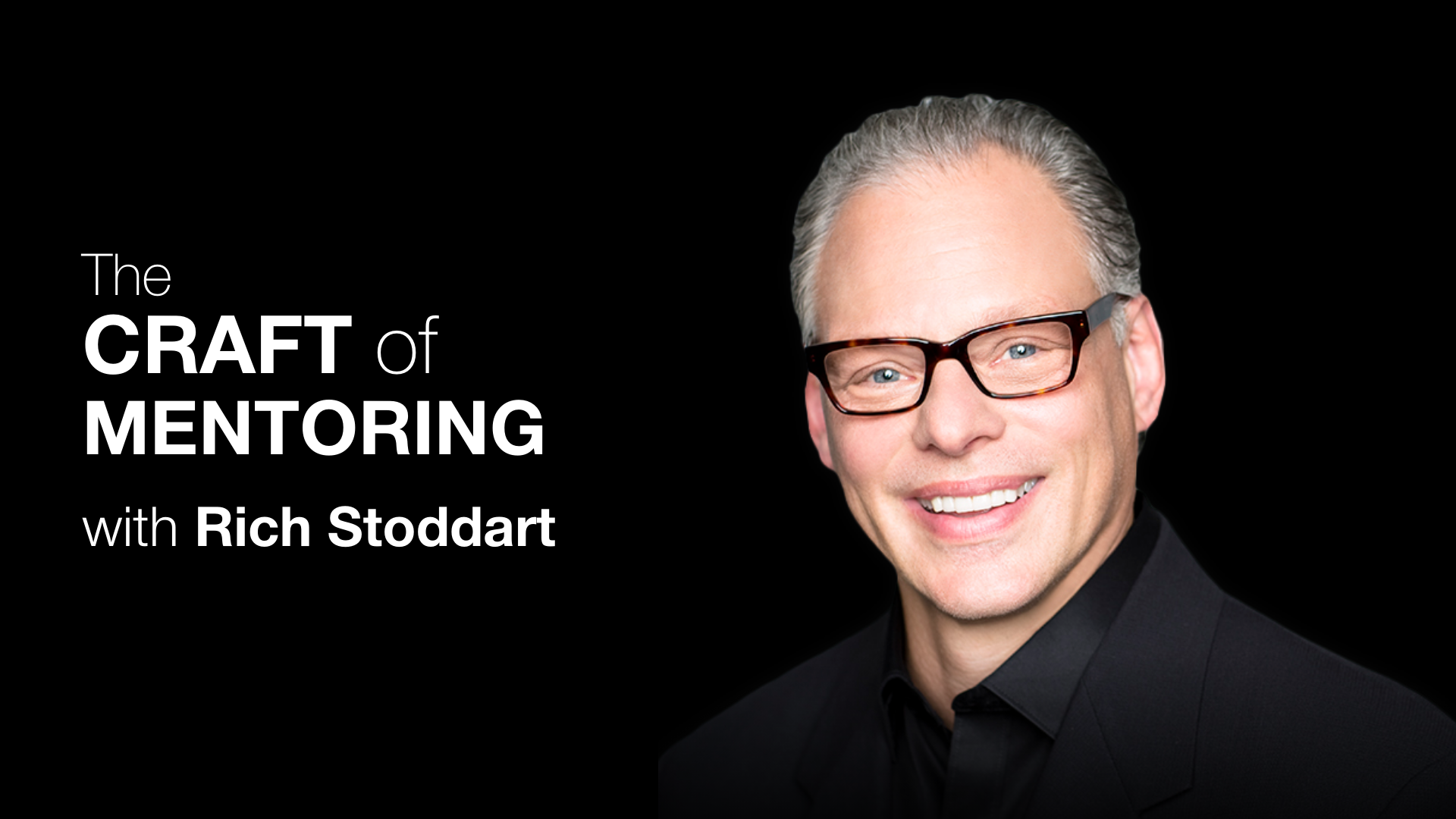
Rich Stoddart, Chair and former interim CEO of Hasbro and former President and CEO of InnerWorkings, and a mentor and coach at The ExCo Group, shares insights with Adam Bryant on meeting clients where they are, helping leaders become fully self-actualized, and that the four most powerful words in the English language are “I need your help.”
Q. What do you see as the X factors of effective mentoring?
A. You have to meet the client where they are. That’s why the Leadership Values Assessment (LVA) that we use is so powerful. It helps me learn very quickly who they are, what they are dealing with, and their aspirations and goals. Those things are the foundation.
I find that a lot of people we coach are self-aware about some of their development areas—they’ve been hearing about them for their entire career—and yet they have not taken action on them. But that’s what we do. We ask, “So what are you doing about it?” And that becomes part of their action plan.
We also deal with the full person, not just the professional. I’ve got clients who are dealing with all kinds of things in their personal lives. We are not just trying to make the professional part of them better so they can create value for the company to achieve the stated strategic goal. We are trying to help them become a more fully self-actualized person so they can more effectively deliver value and growth.
Q. Being an effective coach requires deep listening skills. Where does that come from for you?
A. It comes from my growing up in a challenged household where empathy was kind of necessary to survive. So it’s in my wiring. And I’m built to try to help people be better. Those are the things that I’ve always been good at and what I’ve enjoyed most. I’ve been in professional services my whole career. All we had was our people, so the focus was always, how do we help them be better?
Q. Of all the tools and frameworks that you use, is there one that tends to lead to the biggest unlock?
A. Stakeholder mapping is a big one. And it’s not just about understanding who your key stakeholders are—it’s the two questions that sit in that framework, which are, what does this person need from me, and what do I need from them?
People are generally aware that they need to build these relationships, but they aren’t thinking about the other person as much, and that they have their own needs, wants, and desires. You want to have a plan for building those relationships, rather than just having a coffee with people.
Q. What are some other themes that come up often that you have to address?
A. Imposter syndrome is pretty common. I learned a simple but powerful approach from another ExCo mentor, which is to give the client a single page that lists all the positive feedback that I heard when I was doing interviews about them with their colleagues. The headline would be, “People Believe In You,” and I’d list six of eight verbatim quotes. And then I’d tell them to tape it to their computer monitor and look at it every day.
Q. What was an important lesson that you learned from one of your mentors?
A. Pat Fallon, who founded an ad agency where I worked, was like a father figure to me. We were in the middle of a very difficult, all-consuming new business pitch when he pulled me aside and said, “You’re like a Joe Palooka punching doll that pops back up when you hit it. The thing that you bring that helps make this company great is your passion.”
I went to bed that night feeling totally demoralized by that comment, because I felt like he should have mentioned all that I brought to the table in terms of strategy and operations. But I realized the next day that he was telling me to own my gift. In life, we often work so hard to get better at the things we’re not good at. But you have to lean into your gifts, the things that create maximum value, because they’re innate strengths.
Q. What is the wisest thing that you’ve ever read, heard or said in the context of leadership?
A. One is that the four most powerful words in the English language are “I need your help.” Most of my clients are afraid to say those words, because they see it as a sign of weakness. But the great thing about humans is that when someone says that they need help, almost never does someone say in response, no, I’m not interested. It’s such an extraordinarily powerful engagement tool that changes the conversation in a significant way.
The second one is that 49 percent of our value is based on what we do, and 51 percent is how we do it. I have yet to encounter a client who isn’t competent; they’re in the C suite, after all. They’re smart and they are good at what they do. But the real work is around the how—how to engage, how to work with others, how to show up. They often don’t want to talk about that because it feels softer to them, but it is the thing that makes great leaders great.
Q. How do you help your clients lead in this moment when there is so much ambiguity and so many new challenges?
A. This is a function of the nature of our clients, who all work in large organizations, but managing the matrix is the biggest challenge they have. They have to deal with their own KPIs and they also need to have an enterprise mindset. So we spend a lot of time focusing on what the enterprise needs, and less time focusing on what they need to deliver, because they are usually pretty clear on that.
I also talk with them about how they ensure that they keep learning. This is a chapter of exponential learning requirements, and yet they are working in a job that feels 24/7. So what are they doing to continue to learn and grow? What is their learning agenda?
Q. Are there other big forward-looking questions that people should be asking themselves?
A. Given all that is happening in the world, they have to be asking themselves, what is the change agenda that they can own and drive? What will they own and champion that is going to create the future? And one of my favorite questions is, who are your thought partners inside and outside the organization? Leaders need a network like that to help bring an outside-in perspective.
Recent