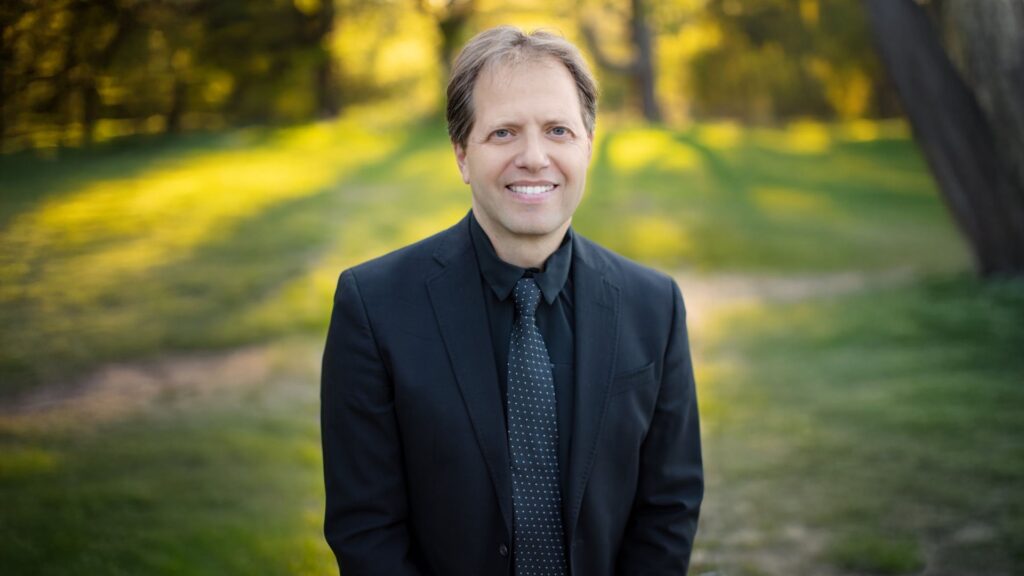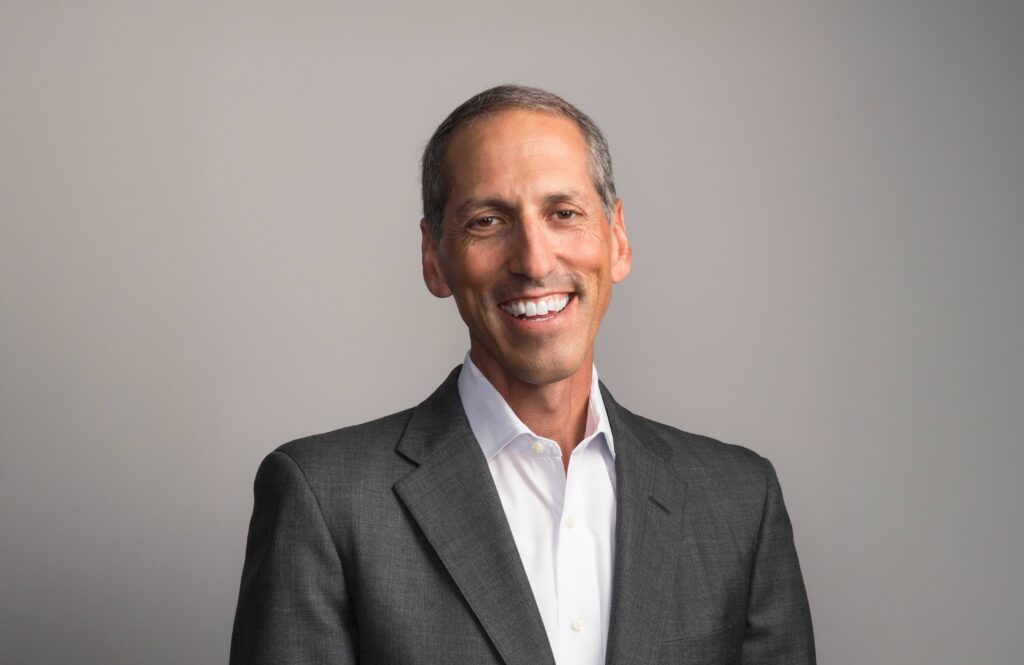

Andrew Slentz, SVP, Global Human Resources at Hess Corporation, shared his key leadership lessons with Adam Bryant and David Reimer in this Strategic CHRO interview.
Reimer: What leadership muscles have you built over these last two years that you want to carry forward?
Slentz: One of my personal lessons, which is also an organizational lesson, is this idea of adaptability and flexibility, and being very open to changing course or your perspective based on new information.
I’ve long been proud of my ability to develop a project plan and drive to execution with measurable results. Covid threw all that out the window. And so, I’ve learned at the tender age of 60 that I need to be a lot more flexible and adaptable than I was even in my 30s and my 40s.
Bryant: What is it about your background that makes you able to survive and thrive in this environment of endless disruption?
Slentz: Early in my career, a few people would say to me, we’ve got to get you out of HR because that’s just a support function. You’ve got to get into operations or marketing or something. And I always said to myself that when human beings stop being as fascinating and unpredictable as they are, I’ll go into something that is a bit more predictable. And here I am 30-plus years later. I find this role endlessly fascinating.
Reimer: Were you the kind of kid who liked new problems?
Slentz: I come from a very large family. I have seven brothers and sisters. My father was a schoolteacher, and my mother was a nurse. My father instilled in all of us that, at the end of the day, there is opportunity through education. He instilled in us the idea that you will have a very fulfilling life if you are endlessly curious. Don’t look at things from a fearful perspective; look at things from an inquiry perspective.
I grew up in a very small farming town, with about 5,000 people. It was so small that I had my father twice as a teacher because there was no other chemistry or physics teacher. But we had the opportunity when I was a sophomore in high school to go overseas and I spent two years at the American School of The Hague.
Don’t look at things from a fearful perspective; look at things from an inquiry perspective.
That was a huge broadening experience for me. It just showed me that there was a huge world out there, with different cultures. I went to school with sons and daughters of diplomats, corporate executives and military leaders. I got exposed very quickly to this very broad, very diverse, very different world.
When you’re curious, there’s really no problem that doesn’t have an answer. It may not be the right answer, and it may not be the optimal answer. But there’s no problem that doesn’t have an answer. And coming from a very large family, there was very little that I could do on my own. We had our own team. Those were building blocks that have just blossomed as I’ve gotten older.
Bryant: In this era of stakeholder capitalism, there are so many demands now being put on organizations and their leaders. What is your framework for dealing with that?
Slentz: You’ve got to rely on your values, and you’ve got to be very conscious about the capital of your senior management, in particular your CEO and board directors. If you speak out on a list of 25 things, you dilute the power and the value of the voice of your CEO, directors, and senior leaders.
Companies need to be clear about which issues they are going to address publicly. It has to tie back to our values and business model. The value of the CEO’s voice is a precious thing, and it can get diluted very quickly. I do think, ultimately, we — as leaders, as CHROs, as employers — are going to have to come to this realization that you cannot be all things to all people.
Reimer: What is your take on the Great Resignation?
Slentz: It’s a bit more complex than how many people are describing it. I do think it’s situational. And by situational, I think there are differences between urban versus rural regions, between the Northeast and the Southeast, between the coasts and the Midwest.
And I think it’s occupational. If you have the kind of flexibility in your job that allows you to leave New York for Iowa, that’s great. If you happen to be in a frontline industry where there is a huge amount of opportunity – trucking, services, retail — you’re seeing a lot of disruption there, as well.
But I think it’s much more nuanced than people are describing, and I think it’s more of a temporary phenomenon than a permanent shift. I think people are making choices about where, how and with whom they want to work. That seems to me to be a temporal phenomenon more than a permanent state.
Bryant: What are the one or two most important lessons you’ve learned in this role that you would pass on to other HR leaders?
Slentz: I’ve learned that simple is better than complex. It may be tempting for some people to come into these roles and upend the whole function. But you’re here in service of your core business. That’s what your function is designed to do, and so don’t try to make it the most important function within your business. The focus needs to be “What are you doing to support the core business?”
Don’t try to cram ten pounds into a five-pound sack.
Don’t try to cram ten pounds into a five-pound sack. I’ve reached a point where I look at one or two enterprise initiatives a year. For example, we have a multiyear, holistic program called Life@Hess that focuses on what’s most important to employees to unlock the real value of our company culture.
The closer you can get to your business, the more likely you’ll be to make those initiatives relevant and impactful to not only your people leaders, but to all your employees. So don’t try to make the function more than it is.
The point is that you as an individual represent that function. You represent it for the board, you represent it externally, you represent it on your leadership team and to all employees. Don’t ask to be a business partner. You are a business partner. Learn your business, understand its finances, and contribute beyond what your title suggests.
Join the conversation on LinkedIn.
Click here to download the article.
Recent