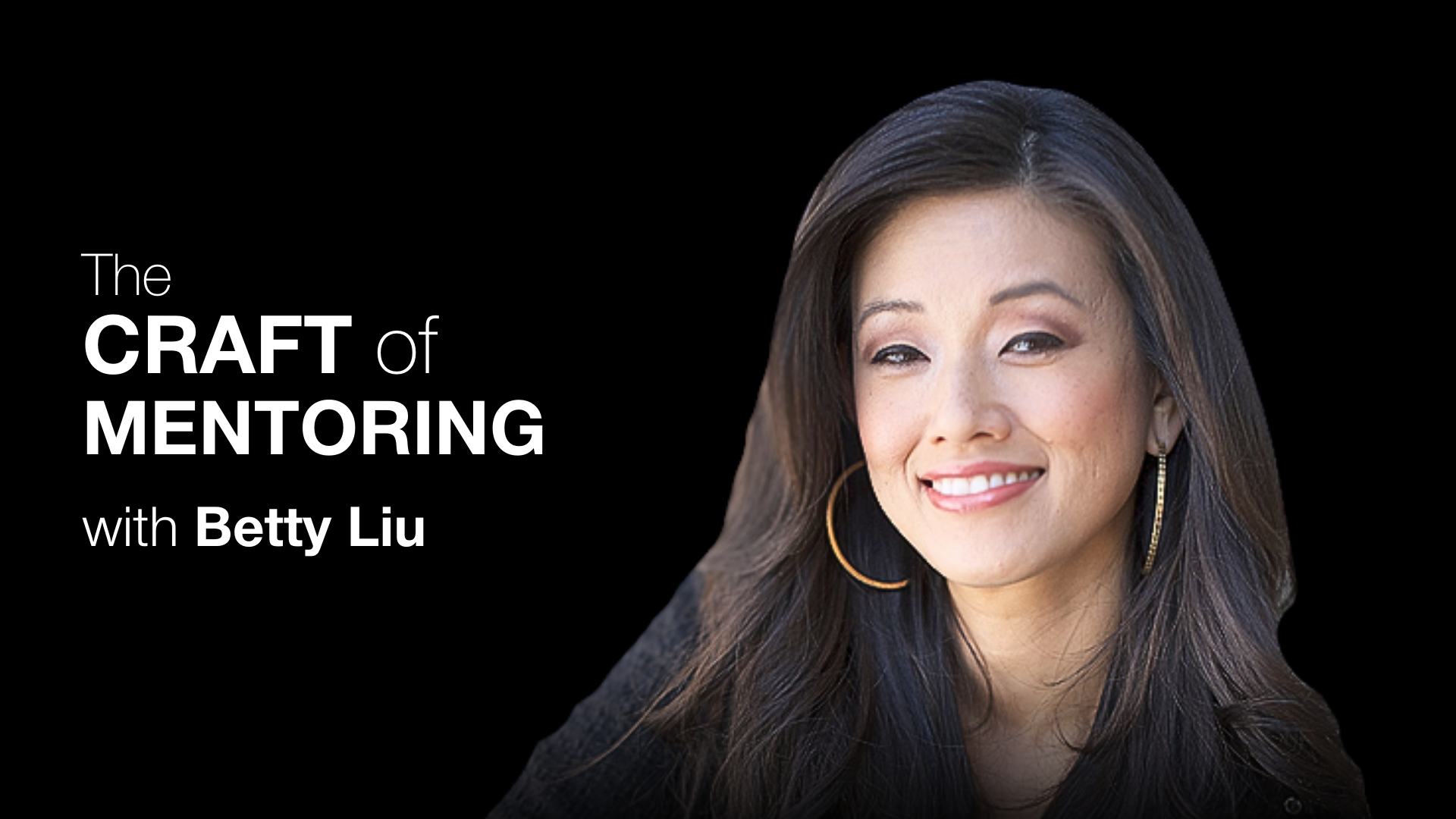
Betty Liu, former Executive Vice Chair at the New York Stock Exchange and former Board Member at L’Occitane Group, and a mentor and coach at The ExCo Group, shares her wisdom with Adam Bryant. With a background in journalism that sharpened her listening skills, Liu explores three key themes: the power of listening at multiple levels, the difference between reactivity and intentionality, and why real coaching progress happens outside the session.
Q. What do you consider to be the secret sauce of mentoring?
A. I believe that listening is an X factor in coaching. And I don’t just mean listening to what people are saying. It’s really about listening at different levels.
The first level is what we all do when we listen to each other, which is to listen to what the other person is saying. We analyze it and then we formulate our responses. But when you’re coaching, you have to listen in other ways. Level two is listening for what’s not being said. And what are they perhaps trying to say, but are struggling to articulate?
The other level of listening is more about observation. What are people’s facial expressions? What is their body language? If you pay attention to those signals, you’ll learn a lot about what is happening with your client.
Q. Were you born with that skill or did you learn it over time?
A. I could trace some of that to my years of being a journalist. When you interview people, you’re listening carefully to what they’re saying and also to whether they actually are answering your questions. What are they not answering? What’s their body language? Paying attention to those signals would then inform the follow-up questions I would ask.
Q. Do you find there are certain coaching tools and approaches that lead to the biggest unlocks?
A. Here at ExCo, we use a lifeline exercise to kick off our engagements, and those conversations are incredibly powerful. I don’t think a lot of C-suite executives spend enough time reflecting on the experiences that really shaped them as a leader, including the very high and very low moments in their lives. Knowing those stories really shapes how you work with them as human beings, not just as leaders.
Q. Is there a particularly challenging conversation you had to have that landed well?
A. It is sometimes a challenge to remind clients that most of the coaching progress happens outside of our 1:1 sessions. We can spend an hour discussing the things they’re struggling with, but the real work happens afterward, when they process what we’ve talked about or when they come away with a few homework items we’ve agreed on.
Sometimes I will encounter clients who approach coaching like it’s a therapy session. They want to come in, talk about their problems, feel better about them, and then we’re done. That may work in therapy, but it doesn’t work for coaching. If clients don’t do the work afterward, they’re just not going to see the progress.
Q. What’s the wisest thing you’ve ever said, read, or heard in the context of leadership?
A. This came up in a coaching session, and what we discussed was as powerful for me as it was for the client. Leaders are so busy, and they’re constantly in “doing” mode, and can often find they always are reacting to things. If they want to change, they may think the quick fix is simply to be more proactive.
But in many ways being proactive actually is just another form of reactivity. You’re just trying to do the opposite of what you believe you were doing wrong. The opposite of reactivity is intentionality. It’s being intentional about how you want to show up, the decisions you want to make, and how you want to move forward. Yes, you should be proactive, but you have to set the intention first before you can proactively move forward.
Q. What is your advice for clients on how to lead in this moment of constant disruption and accelerating change?
A. It is sometimes more difficult for leaders to pull themselves out of the day-to-day fires and look at the big picture. That’s becoming a greater challenge because, for a lot of leaders, their first instinct is to just do more and to bury themselves in more work.
Coaching can help by giving executives a moment to take a step back and consider the kind of questions that every C-suite team and boardroom is thinking about now. How will AI impact us? How do they modernize their teams? What is the right team, and what are the right skill sets going forward? How does the enterprise leverage AI and bring everybody on board? And a lot of people are thinking about succession, particularly about how they build the talent pipeline of people who could someday take over their role.
Recent