The Director's Chair
Succession Planning Requires Greater Focus on the Right Leaders for Different Scenarios
The Director's Chair
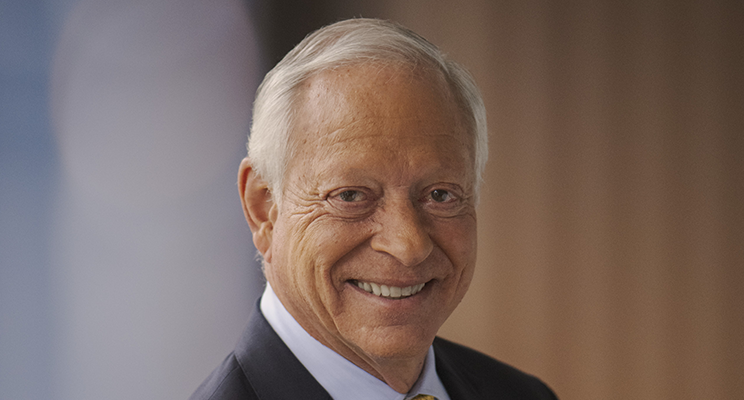
Don Gogel, chairman of private-equity firm Clayton, Dubilier & Rice, shares timely insights with The ExCo Group‘s David Reimer and Adam Bryant on CEO succession scenario planning, building leadership agility, and the qualities that distinguish the most effective CEOs.
Reimer: What do you consider the X factors that separate the best CEOs these days?
Gogel: I always start with whether this person can build a team. Can they build loyalty and commitment from a broad group of people? They have to be able to win the hearts and minds of people throughout the organization and also externally. But some leaders are not great at team-building. They may have a good track record as a CEO, but they are more focused on themselves. Leadership can’t be divorced from followership.
Second on the list is whether they have strong competitive antennae. You really have to understand who your competitors are and what they’re doing. What could they do? Are they likely to do it? Do they have the resources to do it? When might they do it? And how am I going to monitor that and have our organization respond accordingly? That was easier in a relatively stable environment. But now competitors can emerge quickly and change strategy quickly, so you’ve got to be prepared.
Third is agility—can the leader mobilize change? After all, change is inevitable, and it’s likely to be significant and structural, rather than just at the margins. So what’s the mindset and instinct of the leader to be able to make those changes? By analogy, look at how activists attack public companies. They often point out the two or three big things that most CEOs don’t want to deal with. That doesn’t make them geniuses, but they often are right, and the CEO has to be willing to think like that and restructure the company, if necessary.
Bryant: When you are interviewing candidates for a CEO role, how do you get at those qualities?
Gogel: What I have found most effective is to press the candidate on their personal experience with some of these issues. For example, what was the toughest situation where you had to fire an executive, and you really had to struggle with the decision? We had one company where about 30 of the top 50 people had to be replaced. That’s typically not in most CEOs’ resumes. I want to know about the tough choices they made and how they made them. Who did they talk to? I’m looking for a meaningful personal answer.
Reimer: Let’s shift to succession planning. Corporate America doesn’t have a great track record overall in choosing new CEOs, given the turnover in the role. Why do you think that is?
Gogel: It should be a long-term, iterative process, and boards need to be more focused on strategy than they are now. They need to look at different scenarios and consider the kinds of leaders who are best suited for those scenarios. You’re going to have a higher chance of success when you start measuring people against those scenarios.
But instead of making it an ongoing process, succession is often compressed into a short timeframe. Then the board starts thinking of CEO profiles and deciding that, for example, technological skills are so critical that they need a CEO who is proficient and skilled in digital. That’s a nice box to check, but the more critical skill may be their ability to hire the right digital team, rather than focusing on a functional approach of hiring a great technology, marketer, or operations person to be CEO.
To me, those are secondary considerations. But for most boards, they’re the primary considerations, and they don’t give themselves enough time to focus on the strategy and the kinds of leaders they will need to execute that strategy.
One of the key functions for the CEO and the board is to do scenario planning. It strikes me that very few companies do it. And even when they do it, they often don’t take the extra step of thinking through the implications of the strategy, particularly for leadership. You have to build that muscle by using it consistently.
Bryant: Sometimes CEOs can be reluctant to talk about succession because they have no intention of passing the baton anytime soon. What’s your advice to directors for introducing that elephant in the room?
Gogel: It can be hard. You have to put on the table the fact that succession planning, which is done all the time for the rest of the organization, shouldn’t stop here in the boardroom for the CEO role. You can add that it’s not targeted to a particular timeframe; rather, it’s just part of the continuous process of thinking about succession for the whole organization.
You can talk about scenario planning, building organizational skills and muscles, and recruiting the right people across the board based on those scenarios. The point is that it’s smart to be thinking that way. You’re not leading with the idea of succession. Instead, you’re framing it as an ongoing conversation about strategy and scenario planning.
Reimer: You went through your own succession process at CD&R several years ago to name a new leadership team. Can you talk about your approach?
Gogel: The starting point was at least two years before the actual succession. We were targeting our next fund, and it seemed like a good time to think about succession. But that process had to start with clearly articulating the strategy and thinking through different scenarios.
I set out to meet with every partner at least once, but often two or three times over a year. And at no point in those discussions was there any discussion of who they thought should be the next CEO. Those discussions were going to help us think about our strategy, regardless of leadership. There were many fundamental questions that we had to discuss, because different directions would create specs for different kinds of leaders. Those conversations led to a coherent view—with, I would say, about 80 percent consensus—around the key dimensions of the strategy we’re pursuing now.
That then led to stage two, which was to build out what the strategy meant for leadership capabilities. We started by focusing on the leadership team overall, not just the CEO. We had four strong candidates. There was a lot of discussion about different organizational models. You can’t separate the specs for the CEO from the whole management team and how we operated. So we had a lot of discussions about how we operated as an organization.
I met with the partners, individually and collectively, and said that I didn’t have my finger on the scale, but that I wanted to read back to them what I heard about what they wanted our strategy to be and the kind of organization we wanted to be. That should then guide their thinking on stage three, which was, who’s qualified? Who would be the best combination for the leadership team?
Because it’s a partnership, ultimately, you have to win the hearts and minds of everybody to be an effective leader. You need coherence about all three—strategy, organizational design, and the personal characteristics of the individual leaders. My approach wasn’t command and control, because that’s now how we are structured. I made a recommendation based on what I was hearing, and I shared my thinking, but I didn’t put my finger on the scale.
Jack Welch told me that if you’re setting an objective to design a new leadership team so that no one leaves after the succession plan is announced, you will make a big mistake and probably choose the wrong person. He said that you’ll be extremely lucky if only one person leaves after you name a new CEO. It turned out we did lose one, but Nate [Sleeper, the current CEO] has been the right leader at the right time. People say to me that I made the right choice, but I’ll point out that it was the partnership and the process that led to the right decision.